IT Asset Buyback vs Scrap Disposal: Which Is Better for Your Company?
Every company reaches the same point. The laptops are three refresh cycles old, the server room has racks nobody has touched in years, and the storeroom is full of monitors, printers and cables. Someone has to decide what happens to it all.
Most businesses see two options: sell the equipment through an IT asset buyback, or get rid of it as scrap. They sound similar, since both clear your space, but they differ in what you earn, how your data is protected, and whether you have paperwork to show an auditor.
What is scrap disposal?
Scrap disposal treats old equipment as raw material. It is usually weighed and priced by the kilo, sometimes collected by a local scrap dealer, and broken down for its metals and components.
Typical characteristics:
- Pricing based on weight and material, not on the equipment’s condition or specifications
- Little or no assessment of whether devices can still be reused
- Often informal, with limited documentation
- Data-bearing devices may leave your premises without verified data destruction
What is IT asset buyback?
IT asset buyback treats old equipment as an asset that still has value. A buyer assesses each item, prices it on its merits, and takes care of the rest, from pickup to data destruction to documentation.
Typical characteristics:
- Valuation based on asset type, brand, specifications, age, condition, quantity and reuse potential
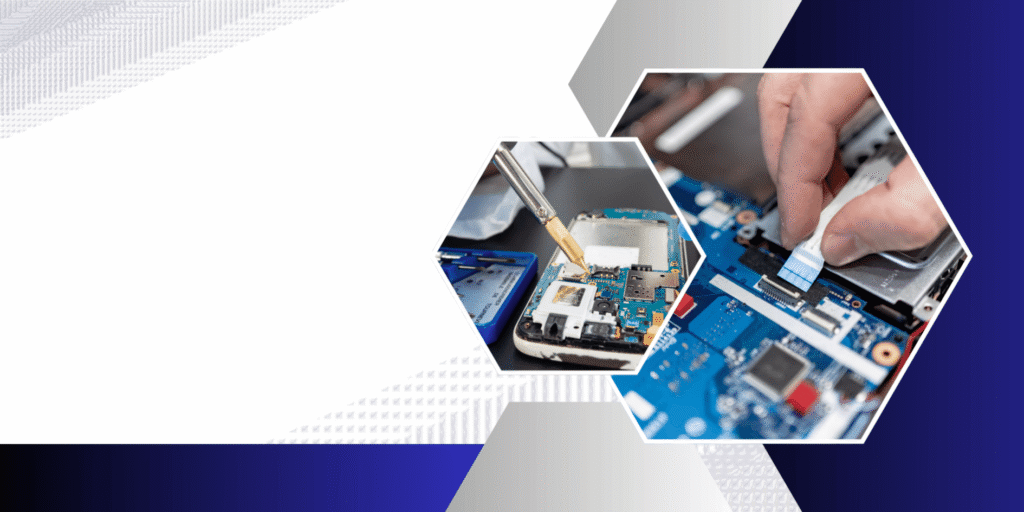
- Working or repairable equipment can be tested and refurbished for reuse
- Only what can’t be reused goes to recycling
- Structured pickup, secure data handling and paperwork at the end
Side-by-side comparison
| IT Asset Buyback | Scrap Disposal | |
|---|---|---|
| How it’s priced | Per asset, based on condition, configuration and reuse potential | By weight or material |
| Value recovered | Higher for newer or working equipment | Lower, since components are valued only as materials |
| Data security | Secure data destruction as part of the process | Often unclear or unverified |
| Documentation | Pickup acknowledgement, asset verification, invoices, recycling certificates | Often minimal or none |
| Audit and ESG support | Records available for audits and sustainability reporting | Little to no support |
| Environmental outcome | Reuse first, then responsible recycling | Depends entirely on the dealer |
| Best for | Laptops, desktops, servers, networking gear, enterprise hardware | Broken, obsolete items with no reuse value |
Why scrap disposal can cost you more than it saves
1. You may leave money on the table. A two-year-old batch of business laptops or a set of rack servers still has commercial value. Sold by weight, that value is lost.
2. Data risk is your risk. Old laptops, servers, storage arrays and SSDs can hold customer records, financial data and internal documents. If a dealer doesn’t securely destroy that data, your company is still accountable for it. This matters most for banks, NBFCs, insurers, healthcare providers and IT companies.
3. You may have nothing to show an auditor. When auditors, finance teams or sustainability leads ask what happened to the assets you wrote off, a handshake with a scrap dealer isn’t a record. Proper disposal comes with a paper trail.
4. Compliance and environmental responsibility. India’s E-Waste (Management) Rules, 2022 expect e-waste to be handled through authorized channels. Informal disposal can create environmental and legal exposure. See our guide on E-Waste Management Rules 2022 in India.
When scrap disposal is the right call
Buyback isn’t always the answer. Scrap-style disposal makes sense for:
- Equipment that is physically damaged or non-functional with no reusable parts
- Very old items with no resale or refurbishment market
- Low-value accessories such as loose cables and adapters
Even then, use a responsible recycler who provides documentation, not an informal dealer.
When IT asset buyback is the better choice
Choose buyback when you have:
- A hardware refresh: laptops and desktops replaced in bulk (see How IT Companies Can Manage Bulk Hardware Refresh)
- An office relocation or closure (see Corporate Office Relocation? Handling Old IT Assets)
- A data center decommission: servers, storage, racks and networking equipment
- A compliance-sensitive environment, where data protection and audit records matter
What a good buyback process looks like
- Consultation: you share the inventory, quantities and locations.
- Asset assessment: equipment is evaluated on age, configuration, condition and reuse potential.
- Commercial proposal: a clear quotation covering valuation, pickup schedule and payment terms.
- Pickup and logistics: collection from your office, warehouse or data center, with asset tracking.
- Secure data handling: data-bearing devices are processed for secure destruction.
- Refurbishment and recycling: reusable items are refurbished, and the rest is recycled responsibly.
- Documentation: pickup records, asset verification, invoices and recycling certificates.
Questions to ask before you choose
- How will my equipment be valued, and on what basis?
- What happens to the data on my devices, and will I get confirmation?
- What documents will I receive after pickup? (See What Documents Should You Receive After an E-Waste Pickup?)
- Does the company hold relevant certifications such as ISO 14001? (See ISO 14001 Certification: Why It Matters)
More questions to ask are in How to Choose the Right E-Waste Recycling Partner.
The bottom line
Scrap disposal is a way to get rid of equipment. IT asset buyback is a way to get value from it, and to do so securely, with proper records. For most companies with working or reusable hardware, buyback recovers more value and carries less risk. Scrap disposal is best kept for equipment with no remaining value.
Get a free valuation for your IT assets
Best Tech Reformers Pvt. Ltd. buys obsolete IT equipment from corporates in Mumbai, Navi Mumbai, Thane, Panvel and Raigad, with PAN India service for large projects.
📞 +91 91 461 12399 | ✉️ procure@bestrecycling.in
👉 Request a Free Asset Valuation