
Can Damaged or Non-Working IT Equipment Still Be Sold for Buyback?
Almost every office has a storeroom of old equipment: laptops that won’t switch on, servers that failed years ago, printers with broken parts, and UPS units with dead batteries. Most companies keep them because they don’t know what to do with them, or they assume that broken equipment is worthless.
So, can damaged or non-working equipment still be sold? In many cases, yes. This article explains why it has value, what affects the price, and how a corporate buyback works.
Why non-working equipment still has value
A device that doesn’t work as a whole may still contain parts and materials that do.
- Reusable components. Even when a laptop or server won’t boot, parts such as memory modules, hard drives, SSDs, power supplies, and batteries may still work and can be tested and reused.
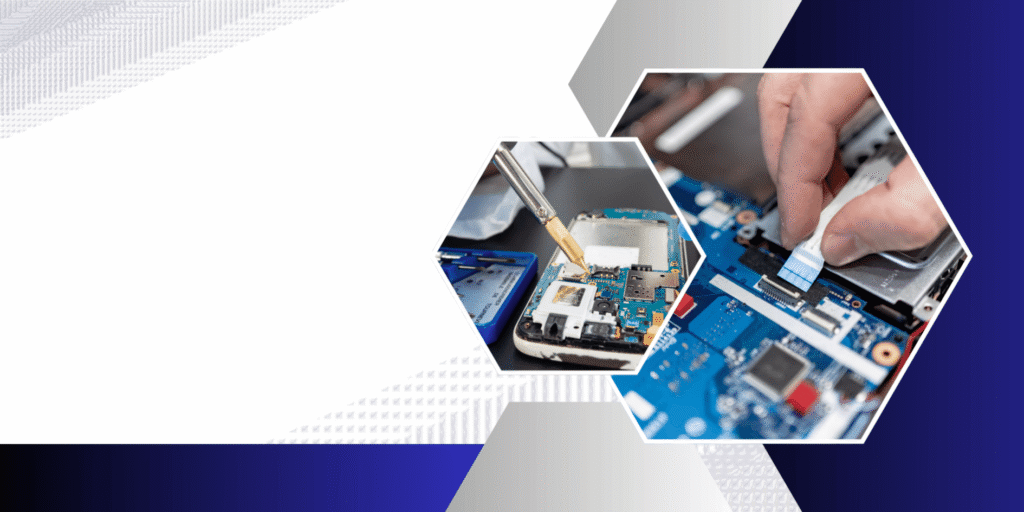
- Repair and refurbishment. Many faults are small, such as a bad adapter, a damaged screen, or a failed battery. Equipment that can be repaired can be refurbished and put back into use.
- Recoverable materials. Electronic devices contain metals and other materials that can be recovered through proper recycling and used again in manufacturing.
So even when a device can’t be reused, it may still have recycling value.
What affects the value of damaged equipment?
There is no fixed price for broken equipment. A buyer will look at:
- Type of equipment. Servers, storage, and networking equipment generally differ in value from monitors or accessories.
- Brand and specifications. Newer, higher-configuration equipment holds more value.
- Age. Older, obsolete equipment is worth less.
- Condition. Whether it is fully dead, partly working, or physically damaged.
- Quantity. A larger lot is easier to process and value than a few scattered items.
- Reuse potential. Whether parts can be reused, or whether it can only be recycled.
A working device will usually be valued higher than a non-working one, but a damaged item can still be worth more than the cost of keeping it in storage.
What types of damaged equipment can be sold?
Corporate buyback covers a wide range of obsolete, surplus, end-of-life, and decommissioned IT assets, such as:
- Laptops, desktops, workstations, and tablets
- Rack, blade, and tower servers, plus storage arrays
- Routers, switches, firewalls, and other networking equipment
- Printers, scanners, copiers, and projectors
- UPS systems, batteries, PDUs, and inverters
- IP phones and telecom equipment
- Monitors, hard drives, SSDs, memory modules, and accessories
The risk of leaving old equipment unused
Keeping broken equipment may seem harmless, but it has costs:
- Data risk. Old hard drives and SSDs may still hold confidential company or customer data, even when the device doesn’t turn on. If that equipment is lost, stolen, or thrown out carelessly, the data can be exposed.
- Lost value. Technology loses value quickly. The longer equipment sits, the less it is worth.
- Wasted space. Storerooms, cabinets, and server rooms fill up with items nobody uses.
- Compliance and audit issues. Untracked, unrecorded assets can cause problems in audits and asset reconciliation.
- Environmental harm. Electronic waste that isn’t disposed of properly can harm the environment.
How the buyback process works
A professional buyback service usually follows these steps:
- Share your list. Send the asset details: type, approximate quantity, location, and condition.
- Assessment. The buyer reviews the equipment based on age, configuration, condition, and reuse or recycling value.
- Commercial proposal. You receive a quotation covering valuation, pickup schedule, and documentation.
- Pickup. The equipment is collected from your office, warehouse, branch, or data center with proper asset tracking.
- Secure data destruction. Data-bearing devices are processed using secure data destruction procedures before refurbishment or recycling.
- Refurbishment or recycling. Reusable equipment is refurbished, and the rest is recycled responsibly.
- Documentation. You receive the paperwork for your records.
Documents you should receive
Whoever you sell to, make sure you get proper records. These should include:
- Asset pickup acknowledgement
- Asset verification report (an itemized inventory)
- Invoice or commercial documents, where applicable
- Data destruction confirmation
- Recycling or disposal certificate
These documents help with finance, internal audits, and sustainability or ESG reporting.
How to prepare your equipment for sale
- Make an inventory list. Note the type, brand, model, quantity, and location. A simple spreadsheet is enough.
- Group items by category. Laptops, servers, networking, and accessories.
- Don’t remove parts. A complete device is usually easier to value than one with missing parts.
- Back up any data you need. Do this before handing over data-bearing devices.
- Take a few photos. These help the buyer give an early estimate.
- Involve your IT and finance teams. They may need to update asset registers.
Frequently asked questions
Can completely dead equipment be sold?
In many cases, yes. Even if a device doesn’t turn on, its parts or materials may have value. The final valuation depends on the assessment.
Will I get paid for every damaged item?
Not necessarily. Value depends on the type, age, condition, and quantity. Some items may have very little value, but they can still be collected and recycled responsibly.
What about the data on old hard drives?
Data-bearing devices should be processed using secure data destruction procedures before they are refurbished or recycled. Always ask for confirmation in writing.
Is there a minimum quantity?
Ask the buyer. Requirements vary, so share your list and they can advise.
Do you provide pickup?
Yes. Best Tech Reformers coordinates pickups from single or multiple locations, with local service in Mumbai, Navi Mumbai, Thane, Panvel, and Raigad, and PAN India service for larger projects.
Final thoughts
Damaged or non-working equipment isn’t automatically waste. With the right buyer, it can bring some value back to your business, free up space, protect your data, and be recycled responsibly.
At Best Tech Reformers Pvt. Ltd., we buy obsolete and non-working IT equipment from corporates, with transparent valuation, secure data destruction, and complete documentation. Learn more about our procurement process and e-waste management, or request a free asset valuation.
📞 +91 91461 12399
📧 procure@bestrecycling.in